I may sound biased but I love community initiatives.
When I started getting involved in the tech community in 2016~, I was at every event around the country, and I spent my spare time looking for programmes I could contribute to.
My mission was to meet more people like me who loved creating and publishing on the internet and learn more about the industry, as I knew I wanted to pivot to a tech career despite my sciences degree.
Looking back at that time, I really went all in. I loved it, and so much of what came next started with those communities. Today, I get to help create those opportunities for other people, which is still the reason I get up in the morning.
Someone recently asked me for some advice on building out their community experience. They shared that they’d joined this big programme before but nobody seemed to care.
That conversation got me thinking about the gap between joining a programme and knowing how to make the most of it.
I know the times are different; the internet didn’t feel so… noisy, saturated and inauthentic… but I do believe that community initiatives are still a place where you can have genuine connection and thrive.
If I were a member of a community programme, here’s what I’d do today.
The title is just the beginning
I love a title. Put it in the bio! Update LinkedIn! Tell everyone! 😂
When I became an AWS Community Builder, having that next to my name wasn’t suddenly going to change my career, but everything that came with it could.
I could learn something new and write about it, somebody could discover that post and invite me to speak (which I always accepted), I could meet somebody at that event who introduces me to another community, and suddenly one opportunity has created another.
But titles are merely a signal…
Do something with the opportunity
Actually contribute. What are you going to give?
Some examples:
- Write about what you’re learning
- Build a demo
- Run a meetup
- Teach someone
- Give genuinely useful feedback
- Answer somebody’s question
- Bring what you’re learning back into your own local community
That last one is especially important because the team running a global programme doesn’t know your local community like you do.
You know the meetups people actually attend, what people are talking about, what the sentiment is, what developers around you are struggling with, and who the people are that bring everyone together.
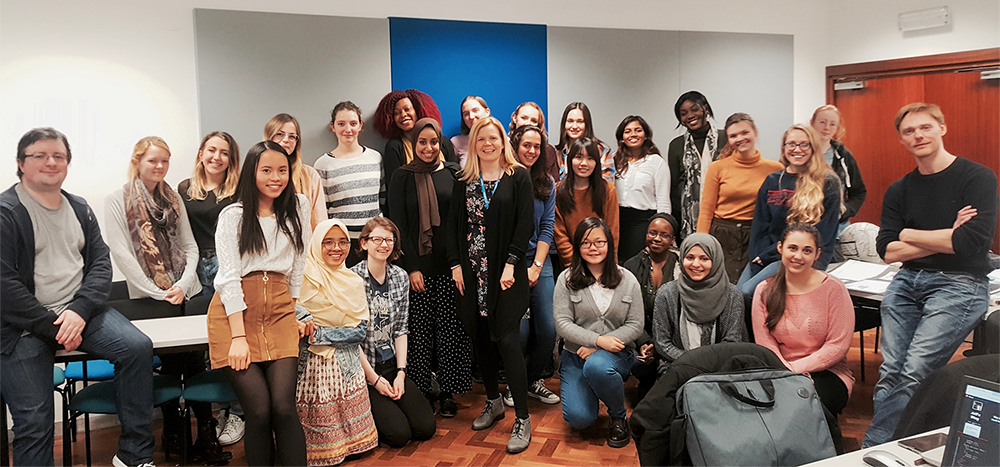
At Code First Girls, I wasn’t just participating in something that existed nationally. I took what I had access to and helped create something locally around it in Sheffield. That’s where #shefcodefirst came from, and that inspired other cities to do the same.
That same idea still matters. Our recent Astra Commons events turned a global launch into local gatherings across the world: a relaxed coffee meetup in Wellington, an open exchange of what people are building in Seoul, and a local builder gathering in San Diego.
The programme provided a shared reason to come together, but the local hosts made it feel like it belonged to their city. That’s the bit you can’t centralise!
Photos from Astra Commons: Wellington
And then, talk about what you’re doing!
I’ve never been particularly quiet about what I’m doing (my husband agreed to this when I read this out to him lol), and I think that has helped me enormously.
I know there can be a weird discomfort around this because nobody wants to look like they’re showing off, but there’s a difference between announcing that you’re part of a programme and actually sharing useful things that came from being part of it.
The useful thing comes first, then you amplify it.
Twenty people might come to your meetup, but another 2,000 people might see your post about it.
You might answer one person’s question, but if you write the answer publicly, another hundred people might find it later (this is what I saw time and time again in the Vercel Community). Someone you’ve never met might follow what you’re doing for months and eventually think of you when an opportunity comes up (side note: this is one of my hiring tactics, btw! Hi, @rhiannon_io!).
Rhiannon Payne on Codex ambassadors hosting global Astra meetups
You don’t always see those effects while they’re happening.
Astra Commons in Adelaide
Get to know the people around you
It’s easy to get excited about access to the company behind a programme and yes, absolutely use that access, but don’t forget about the other members around you.
Some of the best things I’ve taken away from communities have been the relationships (I sound like a broken record at this point): the people I’ve built things with, learned from, helped, and stayed friends with long after the original community stopped being the thing connecting us.
Pauline on helping someone land a life-changing role
There’s nothing wrong with hoping a community will help your career. Just don’t make that the only reason you get to know someone; you’d be surprised where some of those relationships go over five or ten years later.
Make it easy for the programme to help you
This is the bit I appreciate much more now that I’ve actually built and run several programmes myself.
There can be so much happening behind the scenes, and something that feels like one tiny manual task becomes a huge amount of work when you multiply it across thousands of people.
So my advice here is pretty simple: make it easy for the programme to help you.
- Read the documentation or knowledge hub (please!!! 🙏)
- Understand what benefits you have and what you’re expected to do
- Know how you receive things like credits or rewards
- Put deadlines somewhere you aren’t going to forget them
- If something isn’t clear, ask!
This isn’t only about making the programme team’s life easier, it also means you don’t miss out.
There’s nothing worse than doing all this great work and then realising you missed a benefit or opportunity because you didn’t follow the process, submit something you needed to submit, or read the instructions.
And whilst I’m here… read the Code of Conduct too. Understand what you can share, what you can’t, and how you’re expected to represent your relationship with the company. You can put a lot of effort into a programme and undo a surprising amount of goodwill by ignoring fairly basic rules.
Reliability becomes part of your reputation too. If you consistently say you’re going to do something and then actually do it, people notice. I don’t know about anyone else, but I’m more eager to help someone out if I know they will do the thing they say they do.
Developer Community at OpenAI
Bring other people with you
Way before community became my full-time job, I kept coming back to the idea that community is about creating more leaders, and I still believe that.
The best outcome of Code First Girls wasn’t that it helped my career, although it did. It was getting to watch people realise that they could have a career in tech, helping them learn something they thought wasn’t for them, and then seeing some of them get tech jobs or go on to help other people themselves.
Aileen Villanueva on community support for ambassadors
This is where “maximising the benefits of a community programme” can sound a little transactional if we’re not careful.
I’m not suggesting you join something and immediately start calculating how much value you can extract from it.
A much more interesting question is:
How much can I do with this opportunity?
And, weirdly enough, thinking this way has usually created more opportunities for me anyway.
The best benefit isn’t listed
When you join a community programme, you’ll probably get a list of benefits: credits, swag, access, events, training, and more.
Those things are great. Please use them!
The real benefit is what happens when you take one of those opportunities and do something with it. You probably won’t see the pattern while it’s happening. I definitely didn’t.
Looking back, though, I can draw a pretty clear line through all the random community things I’ve done over the years and see how one created the conditions for the next.
European Community leaders in San Francisco
So yes, use the credits, go to the events, take the free swag, and throw the title in your bio.
Don’t stop there though, you have to use the opportunity.