I’d grown up building sites with endless .html and .php pages.
When I started learning React, I felt lost in the complexity of client-side routing until I found Next.js. I could just create a file in the /pages folder, and it worked. I felt like I had so much power to just build anything. And I did.
Using Vercel (ZEIT back in the day!) was a huge unlock. Before this, my 'deployment' process involved opening FileZilla and manually dragging files onto a server, crossing my fingers that I didn't accidentally overwrite the wrong directory or lose my connection mid-upload.
But then I could just run the now command, and my code was live in seconds. Later, with deployments tied directly to Git commits, the distance between an idea and a live URL suddenly felt almost non-existent.
Becoming a Vercelian
There were chances to join Vercel in the early days, but I only officially joined in June 2024. I have to thank Scott for reaching out first in 2022 and again in 2024!
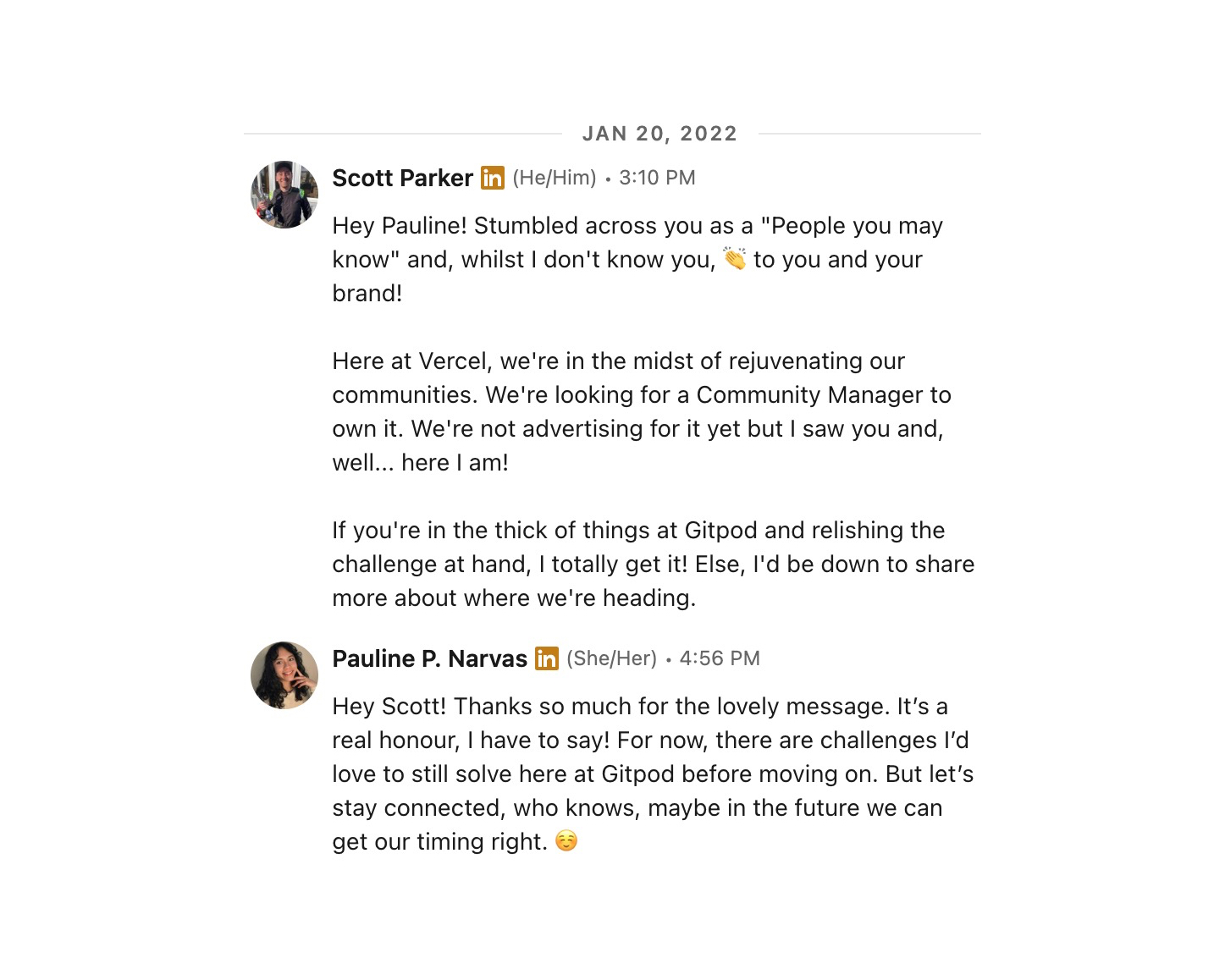
Looking back, I’m a firm believer that the timing was exactly right.
I arrived just as the company was evolving beyond the frontend cloud I’d always known into a new era of AI-native tooling. Being there just as v0 took off felt like a total full-circle moment; the gap between having an idea and seeing it live was practically gone.
We were literally moving at Turbo(repo)(pack) speed, but even faster than that.
So did my career!
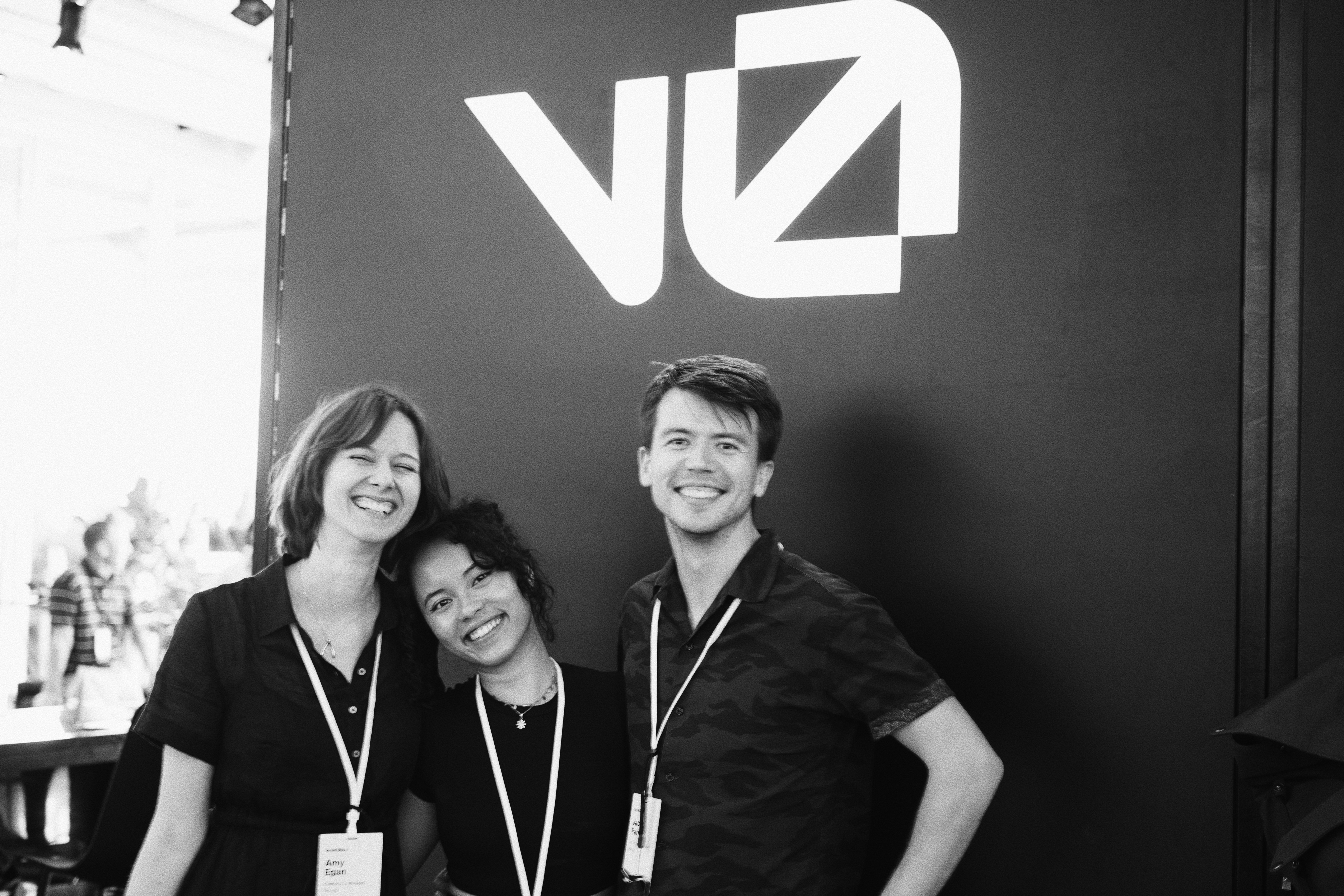
Within seven months, I was given the opportunity to lead our Community team. We were small and mighty (quite literally just me and Amy at the start), but over the next two years, we grew to a team of five as our scope expanded.
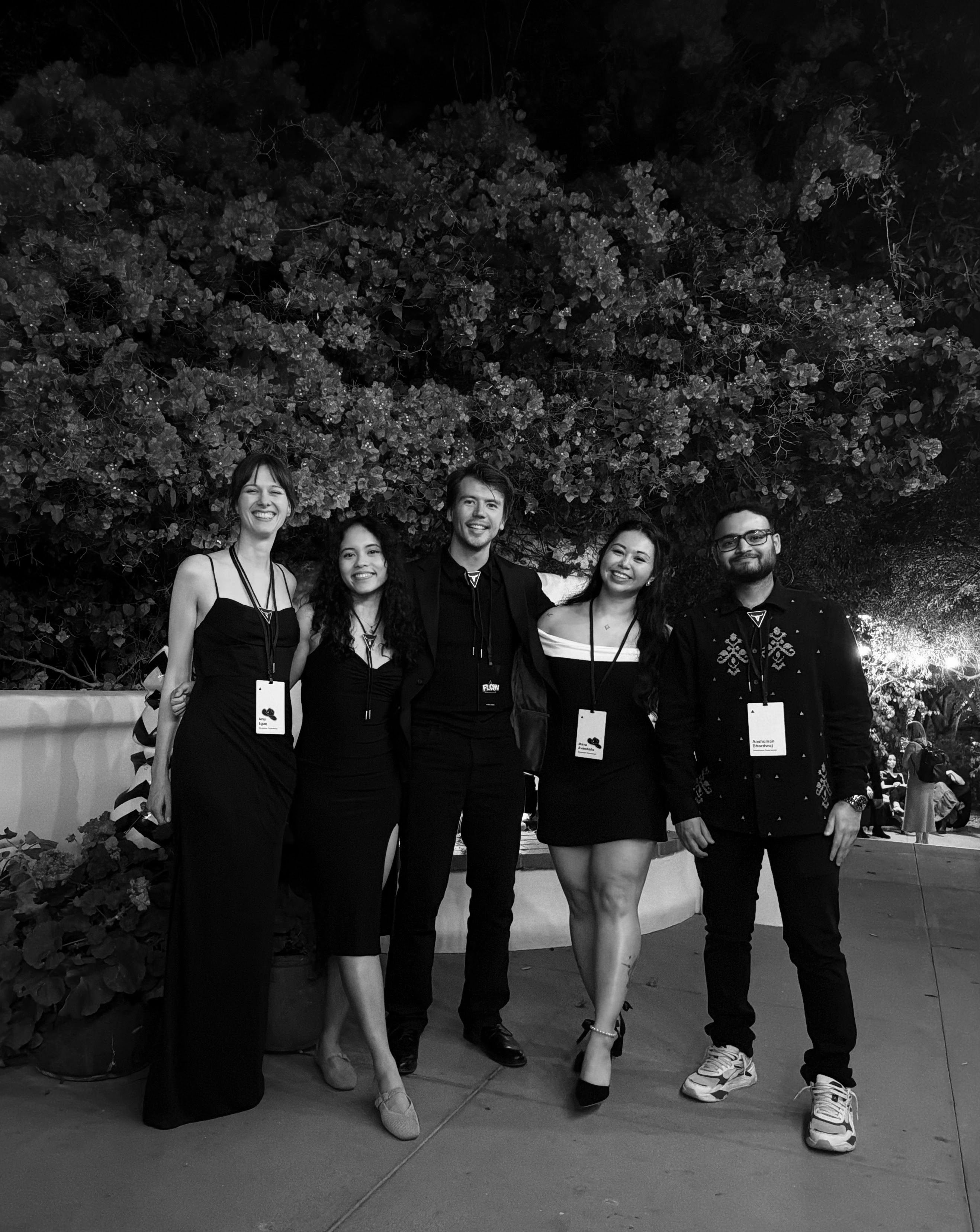
Leading that growth in such a high-velocity environment was the ultimate masterclass. It’s the kind of place where one year somehow feels like five. The highs were high, the lows were intense, and both taught me lessons I’ll carry for life.
As the tech got faster and the company got bigger, I realised that the things you can't automate are the people, the culture, and the community.
I can't stress enough how much I loved working at Vercel. Handing in my notice a few weeks ago was the most difficult decision I've ever had to make, but it's one that I know I'll look back on as a defining moment in my career.
Stepping back from it all, a few things stand out most clearly.
Community Building
What I learned is that community work happens across three layers:
- the moments that make people feel seen
- the systems that make care repeatable
- the learning loops that help people become experts
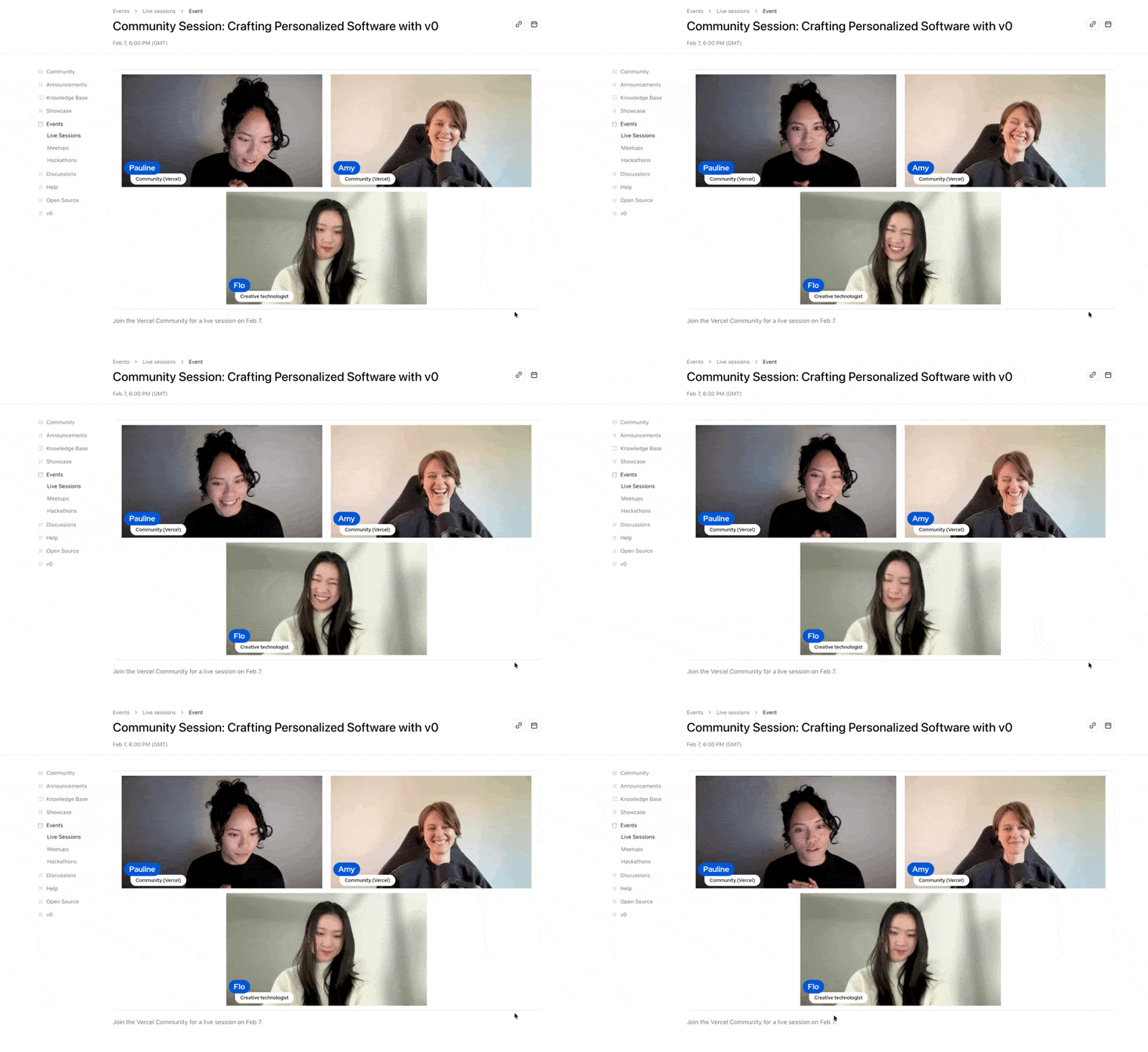
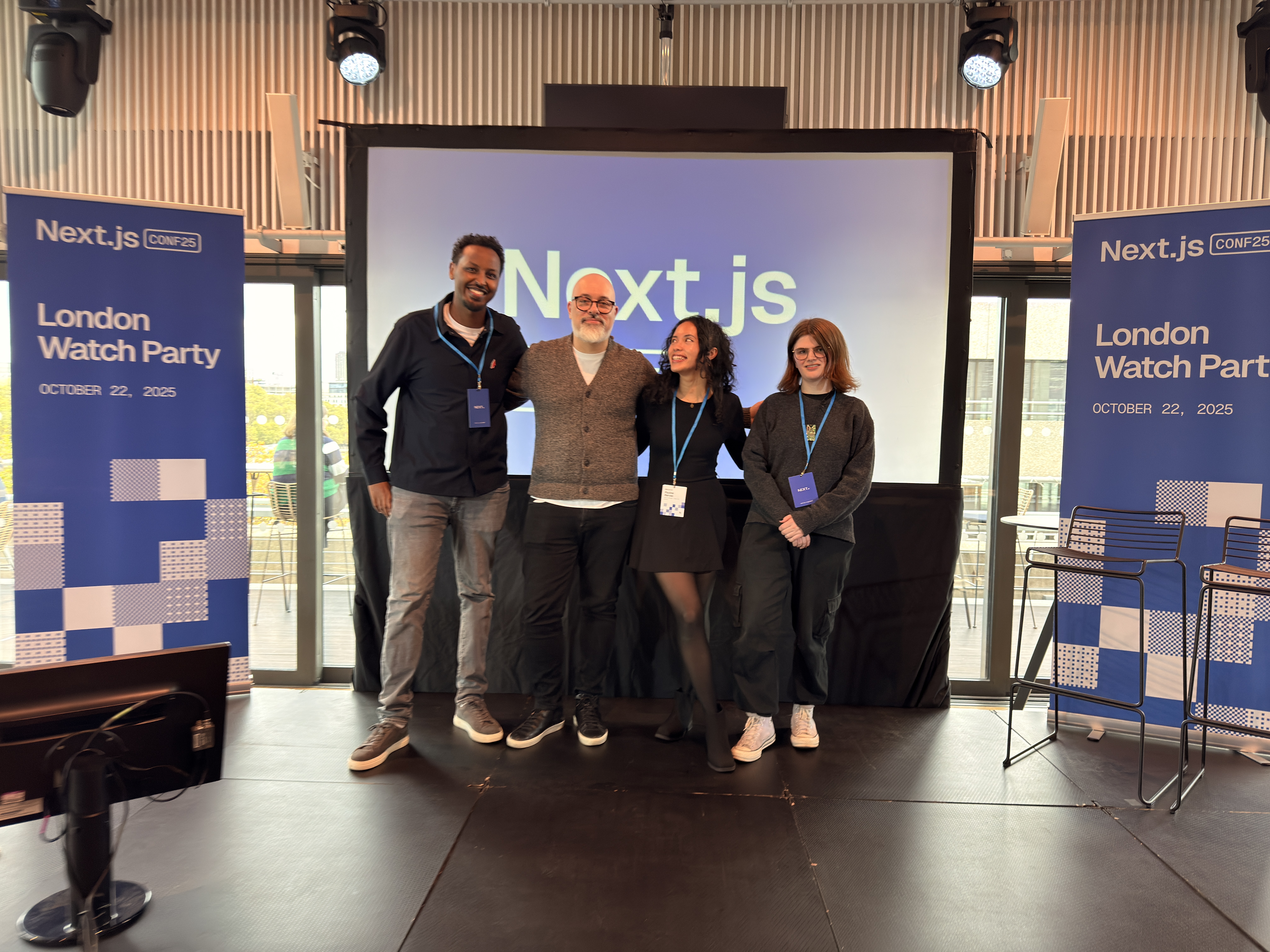
The moments are the visible ones: every public reply that helps not just the person who asked, but everyone who finds it later; every live session; every meetup conversation; every time builders were recognised and celebrated; every user who gets unstuck because someone took the time to help.
Every interaction counts, especially when people are learning something new.
Right now, in the AI world, we’re all still early and still learning.
I think that’s why community matters even more right now. As the technology gets faster and the internet gets noisier, people still need spaces that feel human.
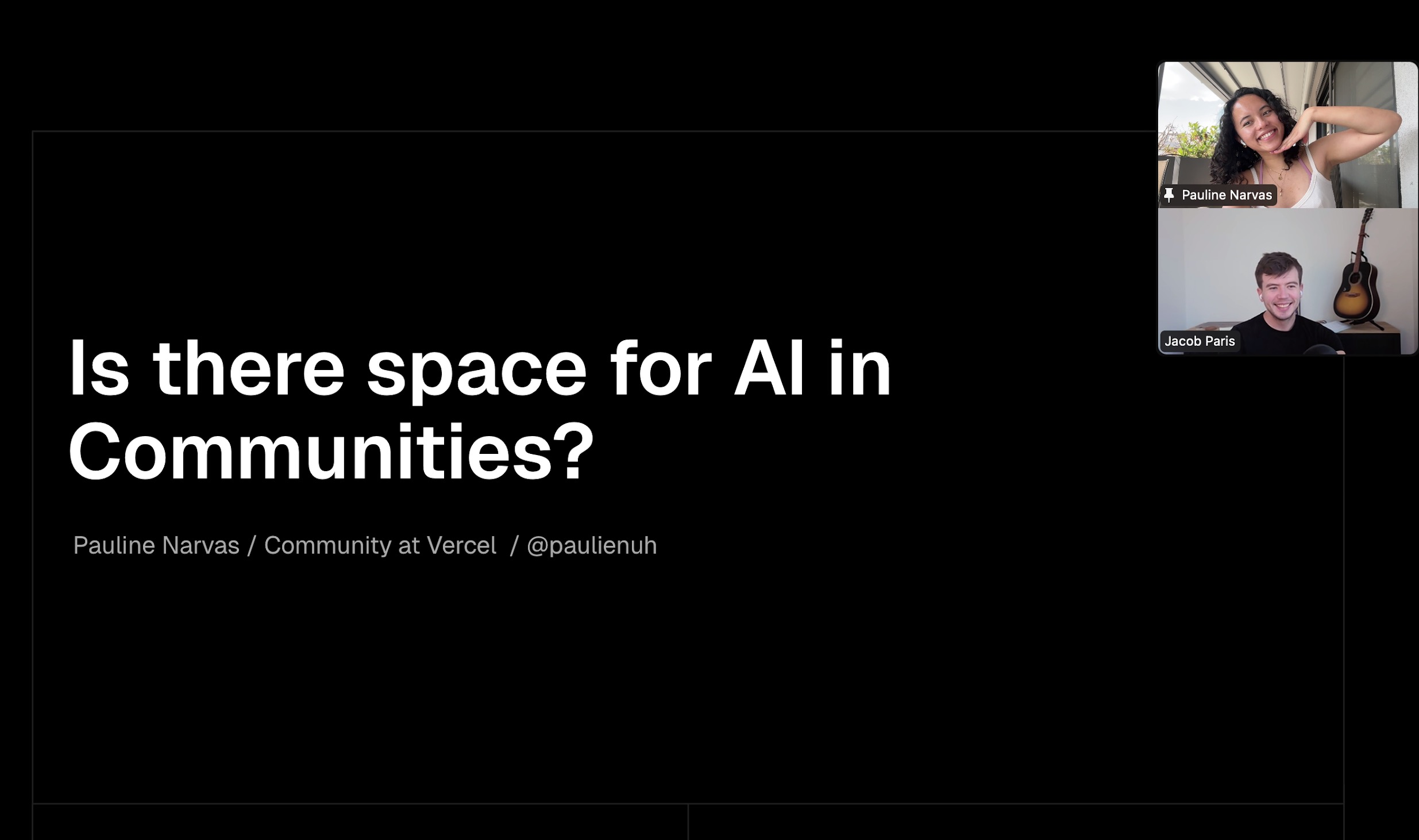
The systems are less visible, but just as important.
“Community Operations” is the work that makes care repeatable: building platforms, designing workflows, using agents thoughtfully, creating feedback loops, and making sure people always know where to go. Even as platforms change, the need for intentional spaces remains.
And then there are the learning loops. Our mission is to create a generation of Vercel experts across our entire ecosystem.
This meant showing people what they could do on the platform, helping them optimize what they had already built, and meeting them in the way they learned best. Some people read docs, some watch demos, some need examples, and some just need another human to sit with them through that one annoying error code.
Community became one of the best places to see what people needed next. The same question appearing repeatedly across platforms was often an early signal that something in onboarding, documentation, or product UX needed attention.
Team Building
Building the team taught me just as much as building the community.
- Hiring well meant looking for people with taste, judgment, kindness, and the ability to create momentum.
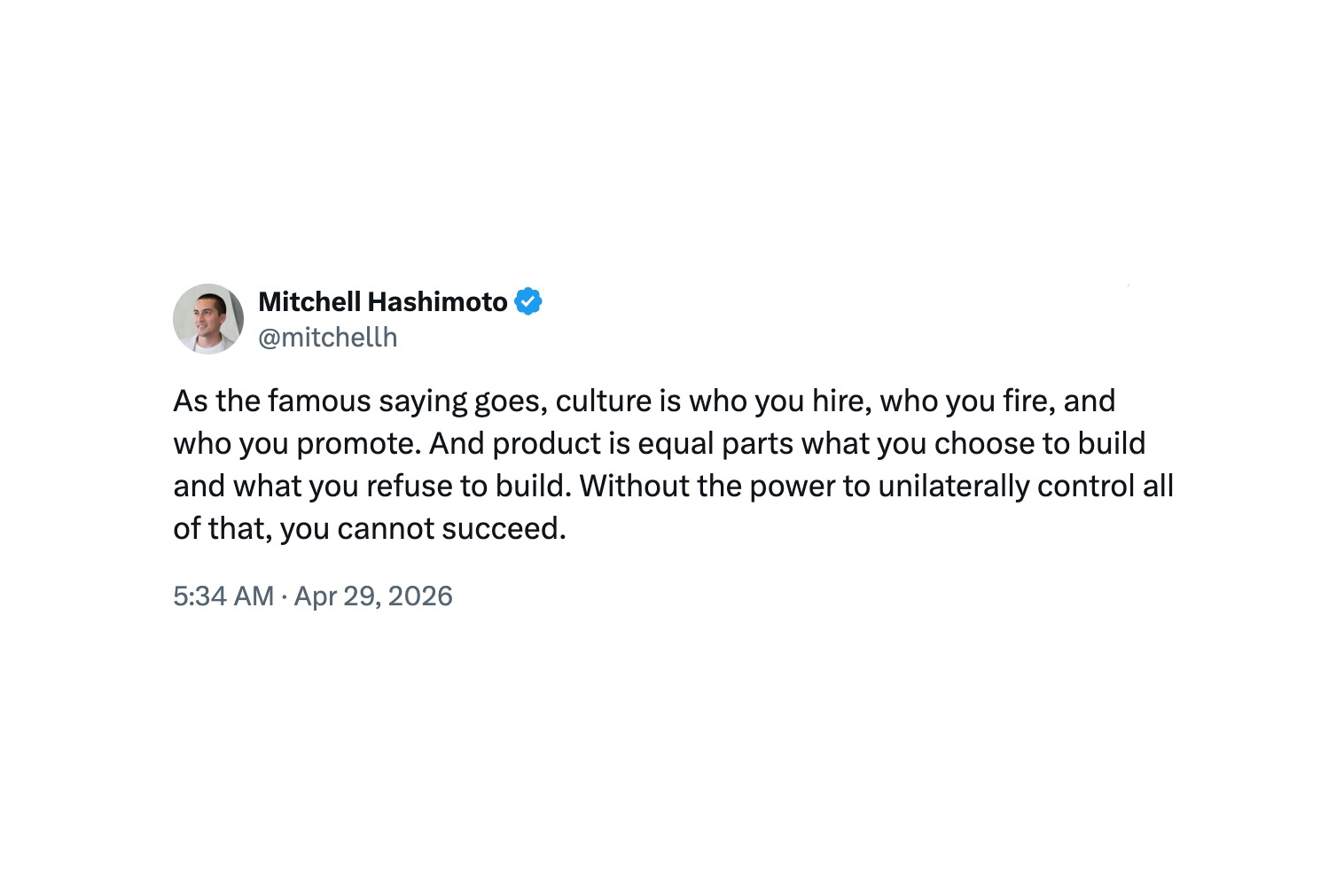
- Leading well meant giving context, setting a high bar, and then trusting people enough to let them own the work.
I learned a lot of this from Matthew. He showed me that creating the conditions for people to do their best work is just as vital as doing the work itself.
The hardest part, sometimes, was stepping back. But that’s also where the best growth happened. If you want people to become leaders, you have to give them the space to lead.
And I have a feeling the best work from this team is still ahead.
Closing the loop
Vercel - thank you for trusting me with the community and this team, and for giving me the chance to build my dream career. You let me do some of my life’s best work.
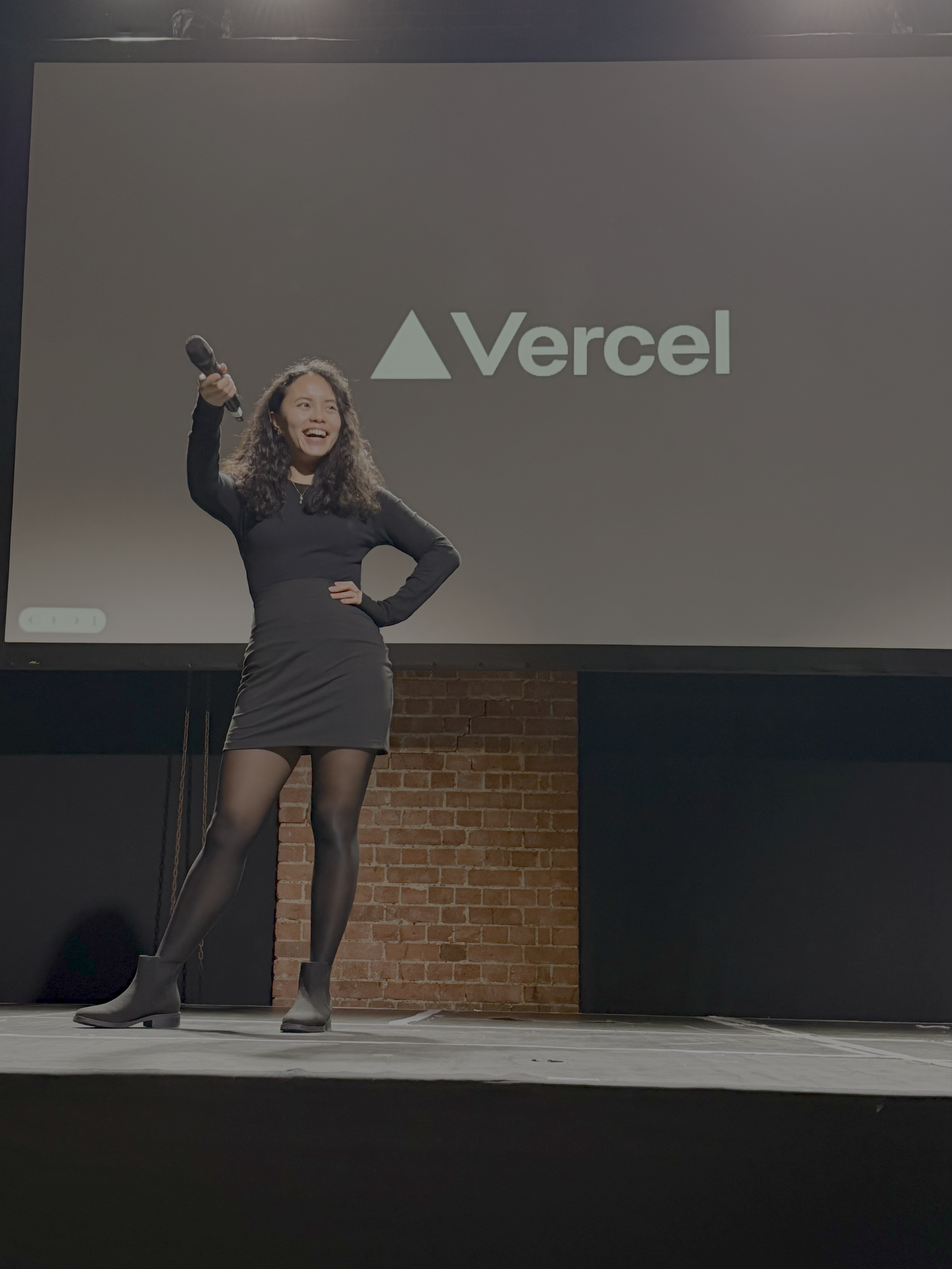
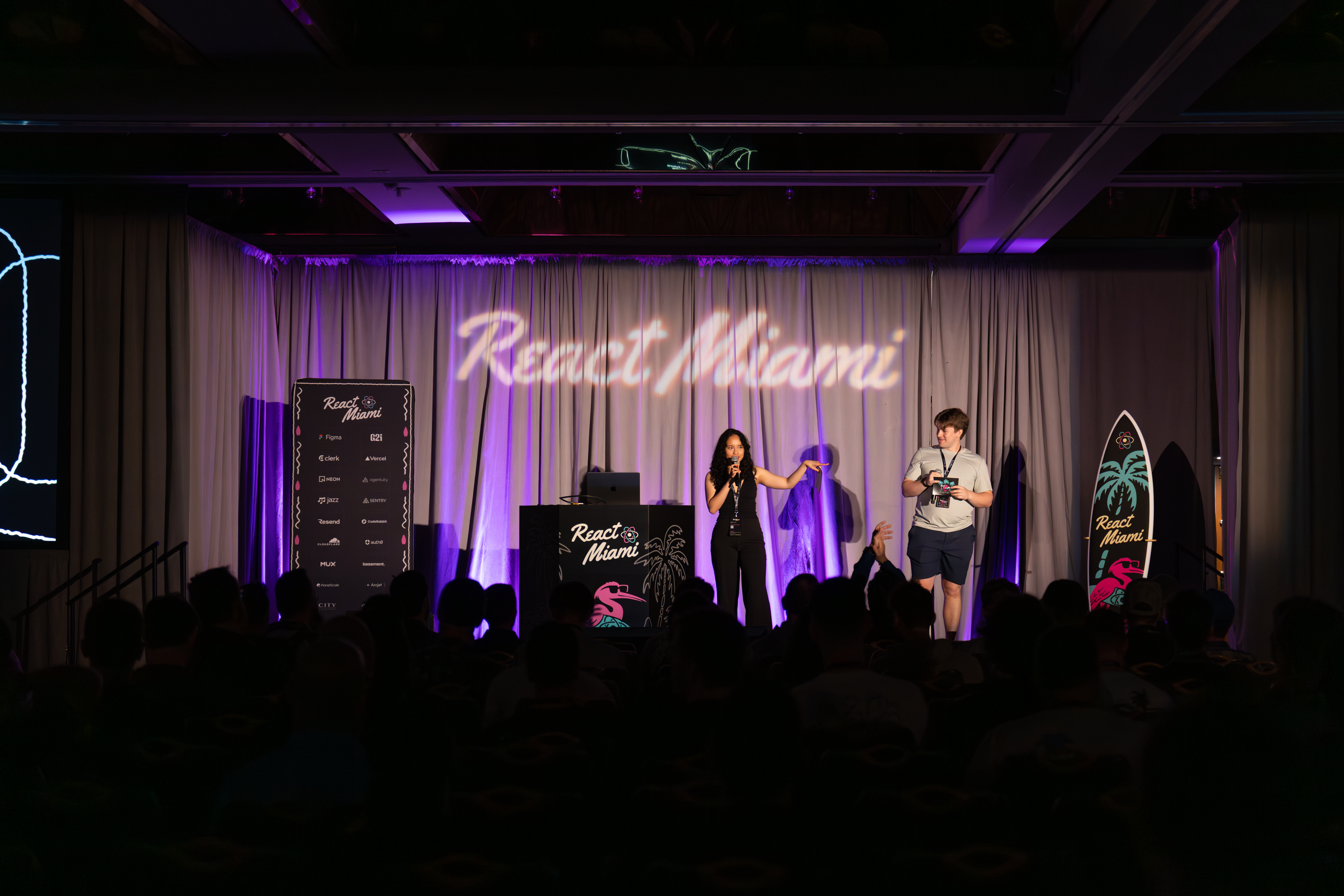
This was the best gig I’ve had to date, and I’ll cherish so many moments from this chapter: exploring more of the US than I ever expected, getting to MC on stages I once only dreamed of standing on, collecting an unreasonable amount of triangle swag, and somehow streamlining my wardrobe into almost entirely black.
A special thank you to Scott, Nathan, Matthew, Paul, Michael, Amy and G for getting me through the door.
To my team, Amy, Anshuman, Jacob and Maya: building alongside you was the greatest privilege.
And to my close partners and friends across the company, Alli, Kap, Marc, Caroline, Swarna, Riz, Sam, Delba, Amy B, Rich, Aurora, Nico, Eve, Luke, Doug, Craig, Ben, Alex, Goncy, and Dom: thank you for making the work a lot more fun!
And to the Vercel community itself: thank you for showing up, asking generous questions, sharing what you were building, and reminding me every day why this work mattered.
Whatever I build next, I know I’ll carry this with me:
move fast, care deeply, and never forget the humans on the other side of the screen
Careers are long, tech is small, and we have a funny way of finding our way back into the same rooms. So I’ll probably see you at a developer event very soon, or somewhere online, building from a slightly different prompt.